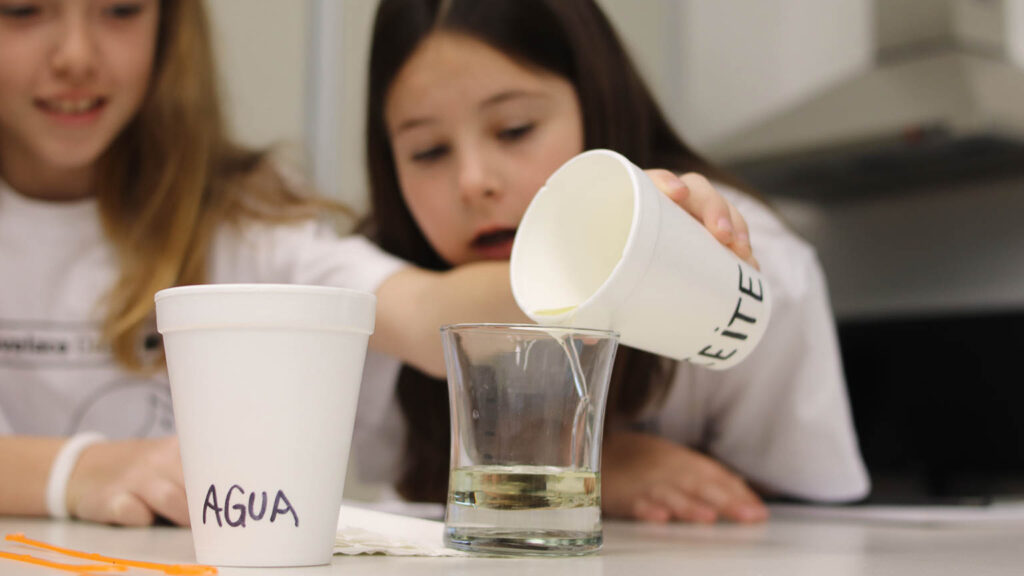
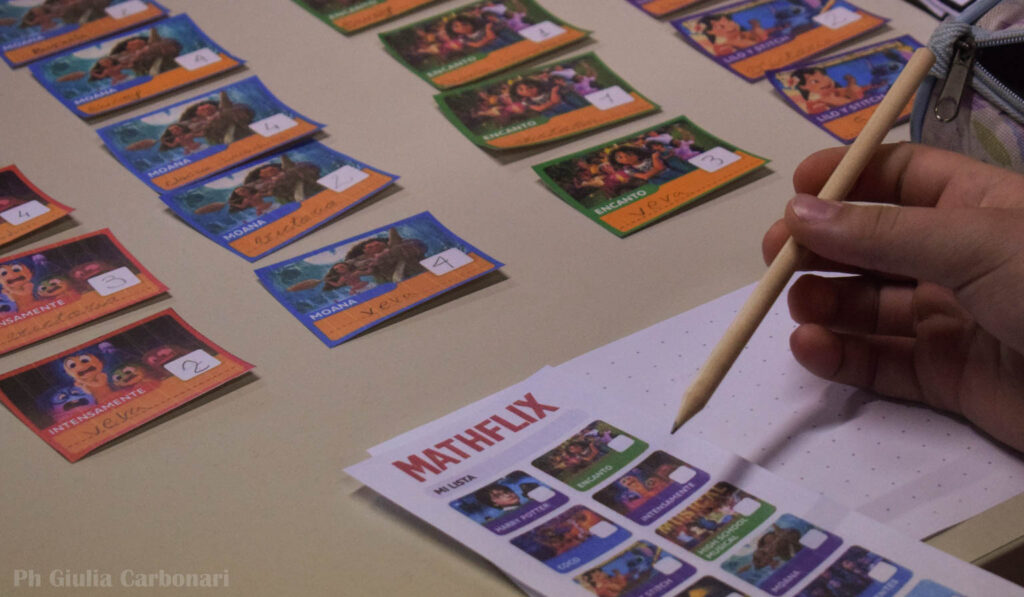
What are we watching today? Netflix already decided

¿Qué vemos hoy? Netflix ya lo decidió
Área
Matemática / Estadística
Edad
10 a 12 años
Duración
60 min.
Cantidad
30 a 35 niñas
DE QUÉ SE TRATA
Actividad lúdica para explorar cómo funcionan los sistemas de recomendación a partir de datos.
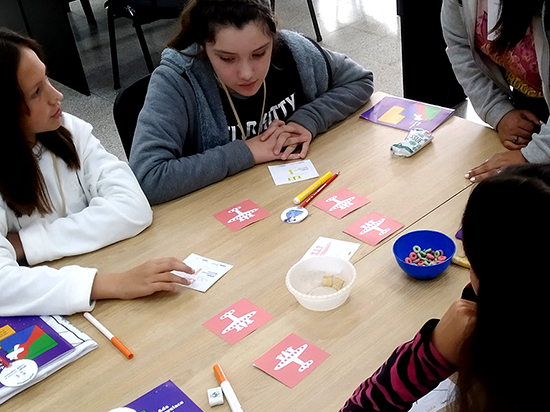
En este taller exploramos cómo hace Netflix para recomendarnos una película o serie. A través de un juego con tarjetas, las participantes organizan información, detectan patrones en los datos que generamos como usuarias y construyen su propio sistema de recomendación. Luego compiten con el algoritmo real de Netflix y, al final, lo usan para predecir si les gustarán títulos que todavía no vieron.
¿Qué vamos a hacer?
- Calificar películas o series según sus preferencias
- Comparar sus elecciones con las de otros compañeros
- Organizar la información en tablas de datos
- Detectar patrones en las elecciones del grupo
- Simular un sistema de recomendación
- Poner a prueba sus resultados frente a otros grupos
¿Qué se aprende?
- Cómo funcionan los algoritmos de recomendación
- Uso de datos para tomar decisiones
- Identificación de patrones y relaciones
- Construcción y lectura de tablas
- Pensamiento crítico sobre plataformas digitales
Recursos
Información para las sedes:
Para descargar los materiales, las sedes deben iniciar sesión
Previous
Next

¿Te interesa esta actividad?
Si querés implementar esta propuesta en tu institución educativa, escribinos para recibir asesoramiento y el material completo: fichas de trabajo, guía paso a paso y video tutorial.
¡También podés registrarte como sede y formar parte de esta red que crece cada año en toda Latinoamérica!
Equipo de trabajo
extraPola FIQ-UNL
Departamento de Matemática. Facultad de Ingeniería Química.
Universidad Nacional del Litoral. Santa Fe, Argentina.
Itatí Zocola
Licenciada en Matemática Aplicada. Becaria doctoral en Matemática en Conicet. Docente del Departamento de Matemática (FIQ-UNL). Investiga métodos estabilizados para problemas de advección dominante. Forma parte de extraPola, participa en divulgación matemática y proyectos de extensión con perspectiva de género.
Pablo Quijano
Marcelo Actis
Doctor en Matemáticas (UNL). Profesor Adjunto en el Departamento de Matemática de la Facultad de Ingeniería Química de la UNL. Investigador Adjunto de CONICET.
Ana de Orellana
Brenda Rivera
Licenciada en Diseño de la Comunicación Visual (FADU-UNL). Estudiante de la escuela 42 Madrid, Fundación Telefónica. Forma parte de extraPola, colectivo de divulgación matemática (FIQ-UNL). Apasionada por la intersección entre tecnología, diseño y comunicación científica.
Andrea Bergesio
Doctora de la UBA, área Ciencias Matemáticas. Profesora Adjunta en el Departamento de Matemática de la Facultad de Ingeniería Química de la UNL.
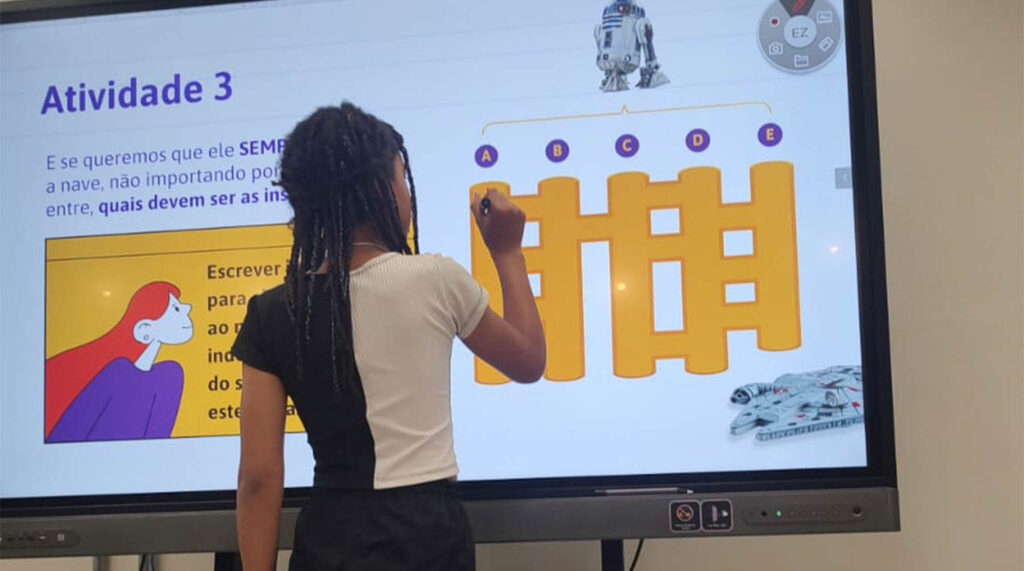
Arturito and the road to the Millennium Falcon

Technology and computational thinking
Área
Computación
Edad
10 a 12 años
Duración
60 min.
Cantidad
30 a 35 niñas
DE QUÉ SE TRATA
Programar es dar instrucciones claras para resolver un desafío paso a paso.
En esta actividad, las niñas resuelven tres desafíos para ayudar a Arturito a llegar al Halcón Milenario. A través de distintos recorridos y consignas, deberán seguir y crear secuencias de instrucciones para cumplir un objetivo específico. De esta manera, descubren cómo funciona el pensamiento computacional y comprenden que, para resolver un problema, es necesario organizar pasos claros, precisos y en orden.
¿Qué vamos a hacer?
- Resolver desafíos para ayudar a Arturito.
- Seguir recorridos con instrucciones dadas.
- Crear nuevos caminos paso a paso.
- Trabajar en equipo para probar soluciones.
- Entender cómo piensa una computadora.
¿Qué se aprende?
- Qué es un algoritmo.
- Cómo ordenar pasos de forma lógica.
- La importancia de dar instrucciones claras.
- Cómo resolver problemas paso a paso.
- Cómo funcionan los programas de computadora.
Recursos
Información para las sedes:
Para descargar los materiales, las sedes deben iniciar sesión
Previous
Next
¿Te interesa esta actividad?
Si querés implementar esta propuesta en tu institución educativa, escribinos para recibir asesoramiento y el material completo: fichas de trabajo, guía paso a paso y video tutorial.
¡También podés registrarte como sede y formar parte de esta red que crece cada año en toda Latinoamérica!
Equipo de trabajo
M. Soledad Fernández
Doctora en Ciencias Biológicas (UBA). Profesora Adjunta en el Instituto de Cálculo de la Facultad de Ciencias Exactas y Naturales (UBA). Investigadora Adjunta de CONICET.
Pablo Turjanski
Doctor en Ciencias de la Computación (UBA). Profesor Adjunto en el Departamento de Computación de la Facultad de Ciencias Exactas y Naturales (UBA). Investigador Adjunto de CONICET.
Esta actividad es una adaptación de la propuesta de Bordignon, F. y Iglesias, A. (2020) titulada Introducción al Pensamiento Computacional, publicada por Educar y UNIPE. Corresponde a la Tarea 1: “¿Por dónde va?”, páginas 55 a 57.
Se recomienda la lectura de la actividad original para una comprensión más profunda del enfoque didáctica.
Aeronautical engineers for a day

Technology and computational thinking
Area
Statistics
Age
10 to 12 years
Duration
60 min.
Participants
30 to 35 girls
WHAT IT IS ABOUT
Design and test airplanes like an aeronautical engineer.
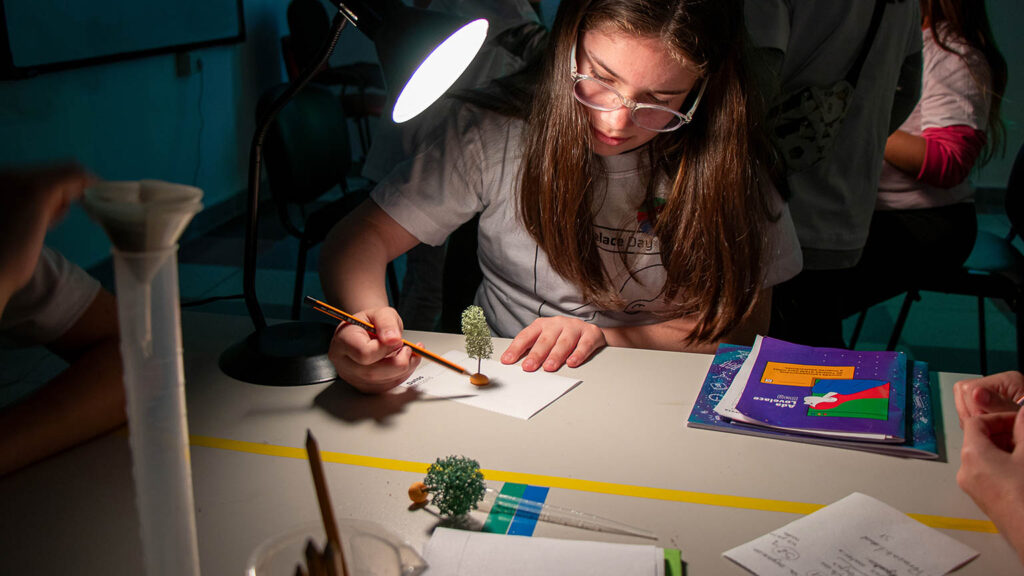
In this activity, the girls explore how aeronautical engineers work through the design and testing of paper airplanes. From observation, comparison and data recording, they discover which characteristics influence flight and how small changes can modify the results. In this way, they learn to analyze information and make decisions based on evidence.
What are we going to do?
- Build paper airplanes.
- Test different flight designs.
- Measure distances and results.
- Compare which airplanes fly better.
- Record data and draw conclusions.
What is learned?
- How an aeronautical engineer works.
- The importance of observing and measuring.
- How to compare results with data.
- That small changes modify the flight.
- How to make decisions with evidence.
Resources
Information for host sites:
To download the materials, host sites must log in
Previous
Next
Are you interested in this activity?
If you want to implement this proposal in your educational institution, write to us to receive guidance and the complete material: worksheets, step-by-step guide and video tutorial.
You can also register as a host site and be part of this network that grows every year throughout Latin America!
Work team
Mariela Sued
PhD in Mathematics from the National Institute of Pure and Applied Mathematics (Brazil). Associate Professor at the Faculty of Exact and Natural Sciences (UBA) and Associate Professor at Universidad de San Andrés. Independent Researcher at CONICET.
Constanza Sánchez de la Vega
Guillermo Solovey.
Sending photos without WhatsApp

Technology and computational thinking
Area
Mathematics
Age
10 to 12 years
Duration
60 min.
Participants
30 to 35 girls
WHAT IT IS ABOUT
Discover how an image travels using zeros and ones.
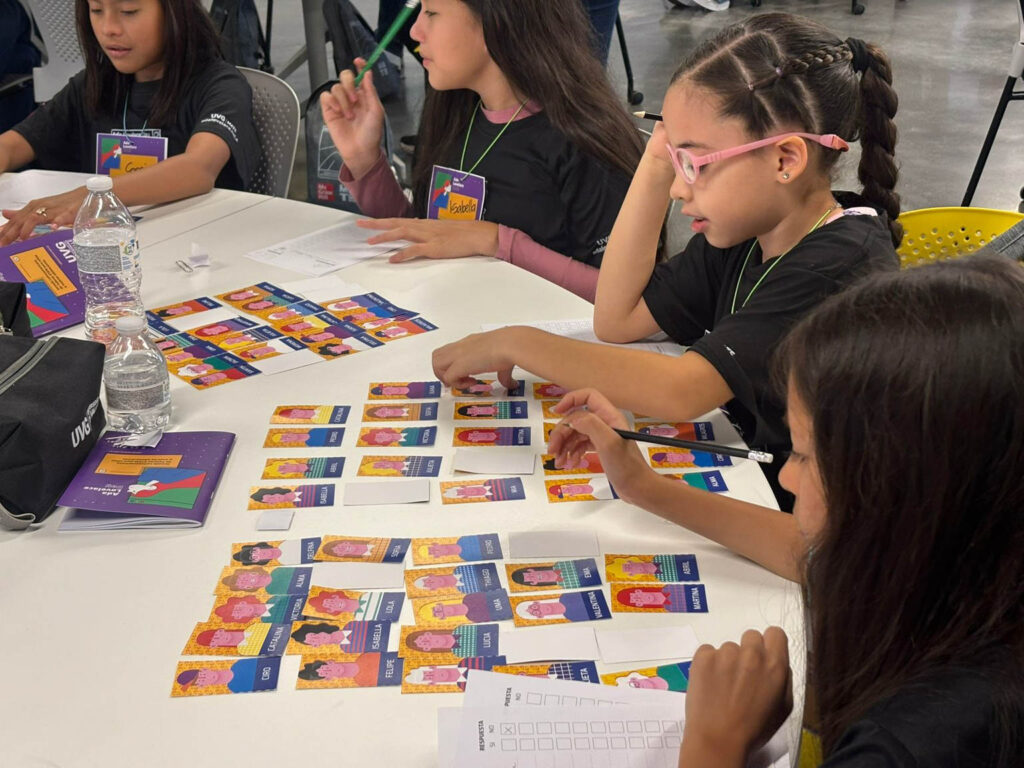
In this activity, the girls explore how it is possible to send photos from one place to another through a mobile phone. Starting from the game Guess Who?, they discover strategies to ask better questions and reduce options more efficiently. Then, they relate that process to the digital transmission of images, understanding how a photo can be transformed into binary information that a computer can interpret.
What are we going to do?
- Play Guess Who?
- Create yes or no questions.
- Look for strategies to win better.
- Discover what a bit is.
- Understand how images are sent.
What is learned?
- What a winning strategy is.
- How to ask better questions.
- What the binary system is.
- How an image is converted into data.
- How photos travel digitally.
Resources
Information for host sites:
To download the materials, host sites must log in
Previous
Next
Are you interested in this activity?
If you want to implement this proposal in your educational institution, write to us to receive guidance and the complete material: worksheets, step-by-step guide and video tutorial.
You can also register as a host site and be part of this network that grows every year throughout Latin America!
Work team
extraPola FIQ-UNL
Department of Mathematics. Faculty of Chemical Engineering.
Universidad Nacional del Litoral. Santa Fe, Argentina.
Marcelo Actis
PhD in Mathematics (UNL). Assistant Professor at the Department of Mathematics of the Faculty of Chemical Engineering at UNL. Assistant Researcher at CONICET.
Andrea Bergesio
PhD from UBA, Mathematical Sciences area. Assistant Professor at the Department of Mathematics of the Faculty of Chemical Engineering at UNL.
Tomás Gerbazoni
María José Llop
Bachelor in Mathematics (UNL). Teaching assistant at the Department of Mathematics of the Faculty of Chemical Engineering at Universidad Nacional del Litoral. Doctoral fellow at CONICET.
Mariel Lovatto
Master in Statistics (UNR). Teaching assistant at the Department of Mathematics of the Faculty of Chemical Engineering at Universidad Nacional del Litoral. Doctoral fellow at CONICET.
Pablo Quijano
Mara Pérez
Brenda Rivera
Bachelor in Visual Communication Design (FADU-UNL). Student at the 42 Madrid school, Fundación Telefónica. Part of extraPola, a mathematics outreach collective (FIQ-UNL). Passionate about the intersection between technology, design and scientific communication.
Agustín Riveros
Student of the Bachelor’s degrees in Applied Mathematics and Data Science. Part of ExtraPola, with whom he seeks to communicate mathematical concepts to the general public in a creative way.
Uma Tedesco
Teo Valencia
Itatí Zocola
Bachelor in Applied Mathematics. Doctoral fellow in Mathematics at CONICET. Teacher at the Department of Mathematics (FIQ-UNL). She researches stabilized methods for dominant advection problems. Part of extraPola, she takes part in mathematics outreach and extension projects with a gender perspective.
Drawing without drawing

Technology and computational thinking
Area
Mathematics
Age
10 to 12 years
Duration
60 min.
Participants
30 to 35 girls
WHAT IT IS ABOUT
Create drawings with clear and precise instructions.
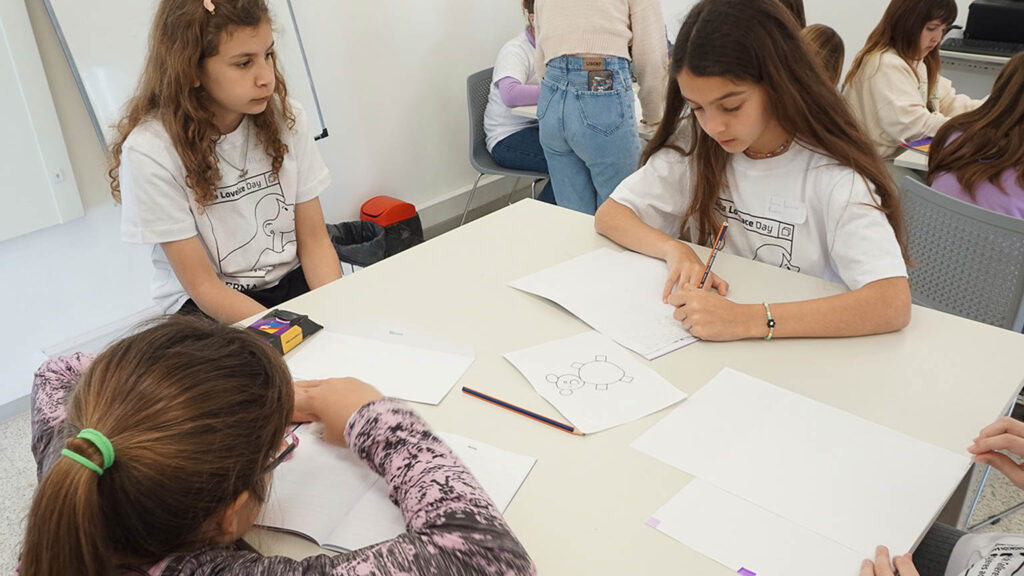
In this activity, the girls work in teams to reproduce a drawing without seeing it directly. One group receives the original image and must write the instructions so that another team can draw it following only those directions. Through this game, they discover how an algorithm works and how a computer needs orderly, clear and precise steps to carry out a task correctly.
What are we going to do?
- Work in teams.
- Write instructions for a drawing.
- Follow rules and orderly steps.
- Reproduce images without seeing them.
- Test how a computer thinks.
What is learned?
- What an algorithm is.
- How to give clear instructions.
- The importance of order in the steps.
- That every program has a beginning and an end.
- How a computer program works.
Resources
Information for host sites:
To download the materials, host sites must log in
Previous
Next
Are you interested in this activity?
If you want to implement this proposal in your educational institution, write to us to receive guidance and the complete material: worksheets, step-by-step guide and video tutorial.
You can also register as a host site and be part of this network that grows every year throughout Latin America!
Equipo de trabajo
M. Soledad Fernández.
PhD in Biological Sciences (UBA). Assistant Professor at the Institute of Calculation of the Faculty of Exact and Natural Sciences (UBA). Assistant Researcher at CONICET.
Pablo Turjanski.
PhD in Computer Science (UBA). Assistant Professor at the Department of Computer Science of the Faculty of Exact and Natural Sciences (UBA). Assistant Researcher at CONICET.
Activity adapted for primary level from another already developed in the course “Programming and its didactics”, at FCEyN-UBA. Faculty of Exact and Natural Sciences, University of Buenos Aires.